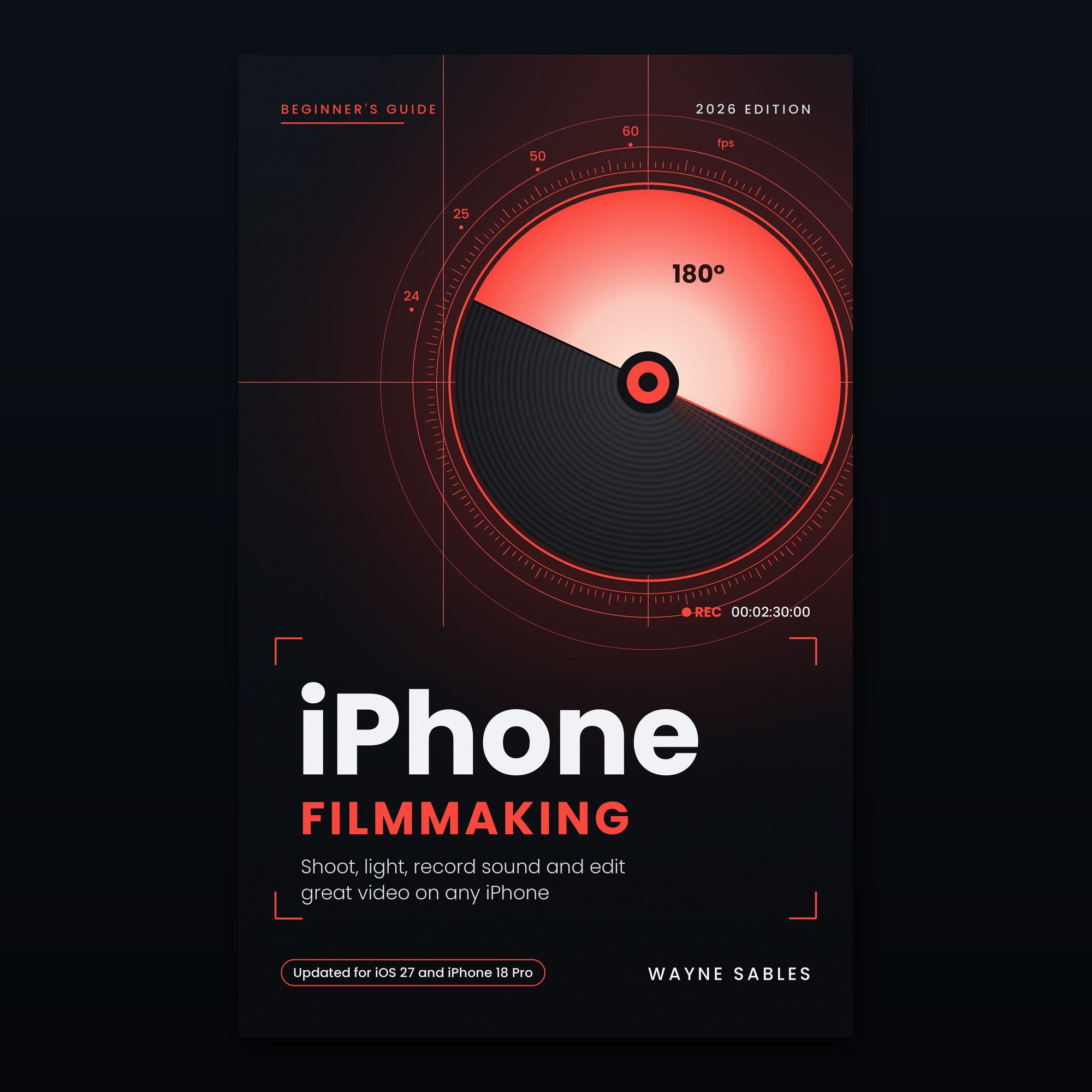
Your iPhone records 4K video good enough for feature films. This book shows you how to make films worth watching with it.
iPhone Filmmaking is a plain-English beginner's guide from documentary filmmaker Wayne Sables. It teaches the craft that separates real films from phone clips: frame rate and shutter speed, steady shots and purposeful camera moves, shot sizes and coverage, lighting faces, recording clean sound, interviewing people, and editing it all into a story.
Updated for iOS 27 and the iPhone 18 Pro, it covers every feature a beginner needs: Cinematic mode, Action mode, slow motion and time-lapse, Dual Capture, AirPods as a microphone, Audio Mix, HDR, ProRes, Apple Log and ProRes RAW, the new Pro controls, and free pro camera apps such as Blackmagic Camera and Final Cut Camera.
It is honest about the limits, too: why phone footage looks jerky in daylight and how an ND filter fixes it, why HDR can look worse on the screens your audience uses, why Log is not a shortcut, and why the microphone matters more than the camera.
Your iPhone records 4K video good enough for feature films. This book shows you how to make films worth watching with it.
iPhone Filmmaking is a plain-English beginner's guide from documentary filmmaker Wayne Sables. It teaches the craft that separates real films from phone clips: frame rate and shutter speed, steady shots and purposeful camera moves, shot sizes and coverage, lighting faces, recording clean sound, interviewing people, and editing it all into a story.
Updated for iOS 27 and the iPhone 18 Pro, it covers every feature a beginner needs: Cinematic mode, Action mode, slow motion and time-lapse, Dual Capture, AirPods as a microphone, Audio Mix, HDR, ProRes, Apple Log and ProRes RAW, the new Pro controls, and free pro camera apps such as Blackmagic Camera and Final Cut Camera.
It is honest about the limits, too: why phone footage looks jerky in daylight and how an ND filter fixes it, why HDR can look worse on the screens your audience uses, why Log is not a shortcut, and why the microphone matters more than the camera.