Whose Story Is It Anyway? On Preserving the Voice of Your Documentary Subjects
I’ve been making documentary films for nearly two decades. In that time I’ve sat across from miners who wept recalling 1984, drag artists who talked about identity with more clarity than most politicians manage in a career, and a duathlete from South Yorkshire who turned grief into endurance. Every single one of them had a story worth telling. My job — and this is something I genuinely believe — was never to tell it for them.
It’s a distinction that sounds obvious. It isn’t.
The temptation to tidy up
When you’re in the edit suite at midnight and you’ve got six hours of rushes to shape into twenty-two minutes, the temptation is to reach for clarity over authenticity. To cut the hesitations, smooth the dialect, lose the tangent that doesn’t seem to go anywhere. And sometimes that’s right. But sometimes that tangent is the film.
The way someone pauses before answering a question tells you something. The way they circle back to the same memory three times tells you something. The way they laugh when they probably should cry — that tells you everything.
If you edit all of that out in pursuit of a clean narrative, you haven’t made a documentary. You’ve made a press release with better lighting.
Build the relationship before you build the shot list
I spent a long time on Building Bridges before a camera came out. That film was about the Miners’ Strike at its 40th anniversary — real people, real community, real wounds that hadn’t fully healed. You don’t just rock up with a Leica and a tripod and expect people to open up about the hardest years of their lives.
Trust is the pre-production work that never makes it onto the call sheet. Meeting people in their space, not yours. Listening without an agenda. Letting conversations go wherever they go and not steering them back to your treatment document.
By the time we filmed, people weren’t performing for the camera. They were just talking. That’s what you want.
Your voice is not the point
Coming from a contemporary dance background — I trained at Bretton Hall, performed professionally for about a decade — I spent years learning how to be present in a space without imposing on it. There’s something in that discipline that translates directly into documentary work. When you’re in front of a subject you need to make yourself almost invisible. Your curiosity should be audible. Your opinion shouldn’t be.
I try not to lead. I try not to finish sentences. I try not to nod so enthusiastically at certain answers that I’m effectively directing people toward the response I’ve already scripted in my head. That’s the subtle stuff that undermines voice without you ever noticing you’re doing it.
Dialect, cadence, specificity — these are not problems to solve
When I was filming RIDE! with the Gypsy and Traveller community for Bradford 2025, and working on Hidden Stories from Westgate Voices in Wakefield, I was working with communities that have often been spoken about but rarely spoken to. The particular rhythms of how those people tell stories — the specific words they use, the references, the humour — that is the film.
I’ve heard other filmmakers talk about “tidying up” accents in the grade, or cutting answers that are “too regional.” I understand the commercial pressure behind that thinking. I think it’s wrong. You flatten a voice, you flatten a person. And you reinforce, quietly, the idea that some ways of speaking are more valid than others.
South Yorkshire is where I’m from. It’s where most of my work is rooted. I’m not interested in making films that could have been made anywhere by anyone.
The cultivating bit
Preserving voice isn’t passive. It’s not just about not interfering. It’s about actively creating conditions where someone’s truest version of themselves shows up on camera.
That means warm-up time before you roll. It means being willing to waste tape on the first twenty minutes while someone finds their rhythm. It means asking the question that’s slightly adjacent to the one in your treatment, because sometimes the angle you planned isn’t the angle the story needs.
In When You Tri, Lindsy James wasn’t just a subject — she was someone letting us into a very particular experience of resilience and loss through sport. The film works because she trusted the process, and she trusted it because we built that trust over time. You can feel it on screen. You can always feel it on screen.
The edit is not the betrayal — it’s the responsibility
None of this means you don’t shape the material. Documentary is an act of authorship. You’re making choices about what stays and what goes every step of the way.
But there’s a difference between editorial shaping and editorial substitution. You can cut for pace and still keep someone’s voice. You can lose a digression and still keep their truth. What you can’t do — or shouldn’t — is reframe what someone said so that it serves your story rather than theirs.
I watch back interviews before I edit them. Not just to pull selects, but to listen again. To ask whether the story I’m building in my head is actually the one that’s in the material.
Often it is. Sometimes it isn’t. And the discipline is knowing which is which.
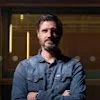
Wayne Sables is a documentary filmmaker based in Doncaster, South Yorkshire. His work includes Building Bridges, When You Tri, and Hidden Stories from Westgate Voices. Find out more at waynesablesproject.co.uk.